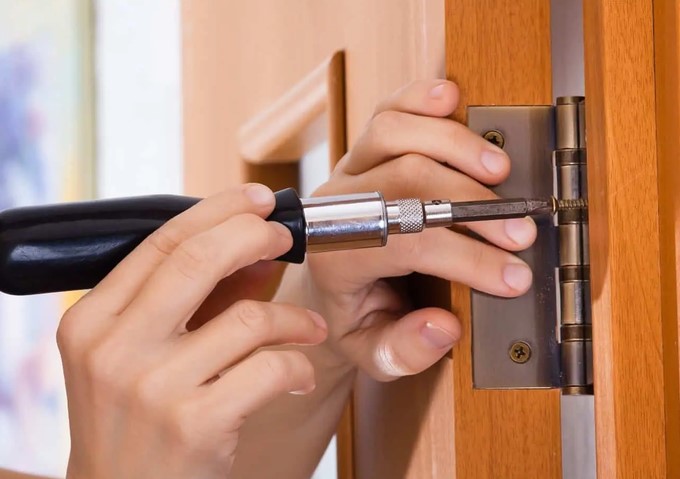
It usually starts in the middle of the night. You creep out of bed to grab a glass of water, step quietly down the hallway, push open the bathroom door, and—SCREECH. A high-pitched metal-on-metal squeal echoes through the silent house, waking up the kids, the dog, and your spouse.
I can’t tell you how many times a client has called me out to inspect a “sagging” or “broken” heavy solid-core entry door, only for me to point out a fine pile of metallic black dust scattered across the floorboard directly underneath the hinge knuckles.
That black powder isn’t dirt. It’s micro-shavings of raw steel—your door hinges literally grinding themselves to death because someone neglected a two-minute maintenance task.
Over my 10+ years as a residential contractor, I’ve learned that quiet homes aren’t built by accident; they are maintained by design. Selecting and applying the right door hinge lube is the single easiest way to stop mechanical friction, prevent premature hardware destruction, and keep your doors gliding effortlessly.
The Physics of Hinge Friction: Why Screeches Happen
To understand why hinges fail, you have to look closely at how a hinge knuckle operates under load.
Think of a door hinge like a series of small, interlocked metal vertebrae wrapped around a central steel pin. Every time you open a 70-pound solid wood door, that weight creates severe lateral torque and downward shear stress on those tiny contact points.
Without a protective fluid barrier, raw metal grinds directly against raw metal. This creates extreme micro-friction, which generates heat, shears off tiny iron particles, and creates that maddening squeaking noise.
Applying a high-grade door hinge lube places an invisible, microscopic film between those metal surfaces. Instead of metal grinding against metal, the surfaces slide smoothly over a cushion of synthetic fluid or solid lubricant particles.
+--------------------------+-----------------------+-----------------------+-------------------------+
| Lubricant Type           | Viscosity / Film      | Dust Attraction Risk  | Long-Term Effectiveness |
+--------------------------+-----------------------+-----------------------+-------------------------+
| Standard WD-40 (Solvent) | Thin / Non-Durable    | Low (Evaporates Fast) | Extremely Poor (Weeks)  |
| Silicone Spray           | Medium Dry Film       | Low                   | Moderate (3 - 6 Months) |
| White Lithium Grease     | Heavy Wet Paste       | High (Traps Dirt)     | Exceptional (1+ Years)  |
| PTFE / Teflon Dry Lube   | Ultra-Thin Dry Film   | Minimal               | High (6 - 12 Months)    |
| Graphite Powder          | Micro-Fine Solid      | Zero                  | High (Messy to Apply)   |
+--------------------------+-----------------------+-----------------------+-------------------------+
Chemical Formulations: Matching Lube to the Application
The biggest mistake DIYers make is reaching for whatever aerosol can happens to be sitting on their garage shelf. Using the wrong formula can actually cause more damage over time.
The WD-40 Trap (Solvent vs. Lubricant)
Standard multi-use WD-40 is primarily a solvent and water displacer, not a long-term lubricant. While spraying it onto a squeaky hinge gives immediate gratification, the light solvent dissolves whatever grease was left inside the knuckle and quickly evaporates. Within three weeks, your hinge is drier and noisier than before.
White Lithium Grease (For Heavy Exterior Doors)
White lithium grease is a thick, petroleum-based lubricant that clings to metal under extreme pressure and resists water wash-off. It is the gold standard for heavy exterior front doors, storm doors, and garage access entry points.
PTFE / Teflon & Silicone Dry Sprays (For Interior Doors)
For interior residential doors, dry lubricants containing PTFE (polytetrafluoroethylene) or silicone are clear winners. They go on wet to penetrate deep inside the hinge knuckles, then dry into a clear, non-sticky film that won’t attract household dust, pet hair, or carpet fibers.
Step-by-Step Protocol: How to Properly Lubricate a Hinge
Spraying lube blindly at the outside of a closed hinge accomplishes very little—the fluid just runs down your paintwork without reaching the internal pin. Here is the proper field method to get fluid deep inside the knuckles.
Expert Advice: Pro Tips and Hidden Traps
⚠️ Beware of Gravity Squeeze-Out
Over-saturating a hinge with liquid oil causes fluid to slowly drip down the door frame over the following 48 hours. On painted trim, oil leaves permanent dark stains; on carpet or hardwood floors, it creates slippery spots and dust traps. Always keep a microfiber rag handy to wipe away excess lubricant immediately after cycling the door.
Dealing with Stubborn Pin Corrosion
If a hinge pin refuses to budge when you tap it with a hammer, do not force it—you risk bending the metal hinge leaves out of alignment.
-
Apply a dedicated penetrating oil (like PB Blaster or Liquid Wrench) directly to the top seam of the pin cap.
-
Let it dwell for 10 minutes to break down rust bonds before tapping again.
💡 Pro Tip from the Field
If you have high-traffic, heavy solid-core doors, consider replacing standard residential plain-bearing hinges with ball-bearing hinges. Ball-bearing units feature permanently sealed lubricated raceways that eliminate metal-on-metal friction entirely, giving you dead-silent operation for decades with minimal maintenance.
Keep Your Hardware Glide-Smooth for Life
Maintaining your doors doesn’t require expensive tools or hours of hard labor. Taking ten minutes once a year to inspect your hardware and apply a targeted door hinge lube prevents unsightly black metal dust, protects finish coatings, and ensures every door in your home operates smoothly and silently.
How many squeaky doors are currently hiding in your home? Have you ever pulled a hinge pin out to clean off that mysterious black sludge? Leave a comment below with your questions or share your go-to home maintenance tips!