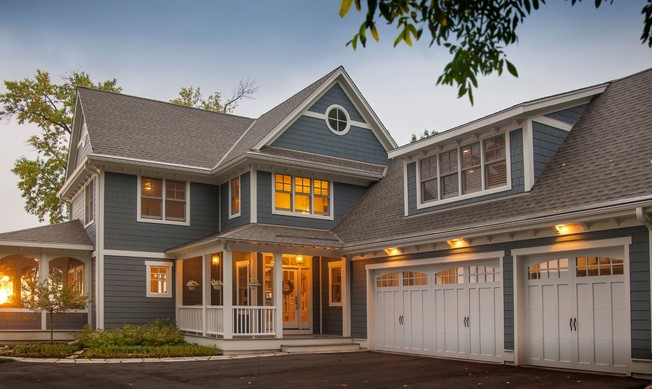
Four years ago, I got a call to inspect a stunning coastal home where the owner had spent over $35,000 on traditional cedar clapboard just six years prior. What should have been a pristine exterior was buckling, splitting, and showing signs of severe wood-rot fungus around the lower window sills. On the north elevation, woodpeckers had punched fist-sized holes into the soft timber.
The homeowner was staring down a full tear-off and replacement bill before his primary mortgage was even ten percent paid off. Meanwhile, three doors down on the exact same wind-swept street, a home I had refitted with fiber cement nine years earlier still looked as clean and sharp as the day we drove the last stainless steel blind-nail.
In my over ten years of hands-on experience in residential construction, exterior cladding, and building envelope design, I’ve seen homeowners make the mistake of evaluating siding purely on upfront material price. They choose cheap vinyl that cracks in sub-zero winters or natural wood that requires relentless repainting every five years.
Real home improvement isn’t about finding the cheapest panel on the lumber yard rack—it’s about calculating total lifecycle value. Investing in engineered Hardie Board Siding (fiber cement) transforms your home’s exterior from a high-maintenance expense into a resilient, high-return architectural asset.
Material Science: What Makes Fiber Cement Virtually Indestructible?
To understand why fiber cement outclasses traditional vinyl, wood, and aluminum cladding, you have to look at its underlying material composition.
Think of traditional vinyl siding like a plastic water bottle left out in the summer sun: over time, UV radiation bakes out the plasticizers, turning the material brittle, prone to cracking from hail, and susceptible to melting from solar reflections off neighboring low-E windows. Hardie Board Siding, by contrast, behaves like liquid stone cast into precise architectural planks.
It is manufactured using a specialized composite matrix of four core ingredients:
-
Portland Cement: Provides extreme structural rigidity, fire resistance, and impact toughness.
-
Ground Sand (Silica): Acts as a dimensional stabilizer that resists thermal expansion and contraction.
-
Cellulosic Wood Fibers: Interlocking organic fibers that give the plank tensile strength and flexibility so it won’t snap during installation.
-
Water & Proprietary Additives: Cured under high-pressure steam inside an autoclave to lock in density and moisture resistance.
       [ Exterior UV Exposure / Rain / Hail ]
                         ||
       +-----------------||-----------------+
       |   Factory ColorPlus® Technology    |  <--- Baked-on finish (Resists fading)
       +------------------------------------+
       |   Cured Portland Cement Matrix     |  <--- Non-combustible stone-like core
       |   Interlocking Cellulose Fibers    |  <--- Adds flexural & tensile strength
       +------------------------------------+
                         ||
       [ Weather-Resistive Barrier (WRB) ]
                         ||
       [ Plywood / OSB Wall Sheathing ]
The Financial Mechanics: Evaluating the Real ROI of Hardie Board Siding
When homeowners ask me if fiber cement is worth the investment, I break down the figures using lifecycle cost analysis rather than initial sticker shock.
While vinyl might cost less upfront during initial construction, its lower impact resistance and higher susceptibility to storm damage erode those savings quickly. According to historical Remodeling Magazine Cost vs. Value industry reports, fiber cement siding replacement consistently recoups between 68% and 80% of its initial cost at home resale, making it one of the highest-ROI exterior remodeling projects available.
| Cladding Category | Initial Cost Range (Installed / Sq Ft) | Maintenance Cycle Frequency | Fire Rating Class | Average Service Lifespan |
| Standard Vinyl Siding | $4.50 – $8.00 | Low (Prone to cracking & fading) | Class A (Melts at high heat) | 15 – 25 Years |
| Natural Cedar Clapboard | $10.00 – $18.00 | High (Repaint/Restain every 3-5 yrs) | Class C (Combustible) | 15 – 30 Years (If maintained) |
| Engineered Hardie Board Siding | $9.00 – $15.00 | Very Low (Factory finish lasts 15+ yrs) | Class A (Non-combustible) | 30 – 50+ Years |
| Brick / Masonry Veneer | $18.00 – $30.00 | Low (Requires occasional tuckpointing) | Class A (Non-combustible) | 50+ Years |
Defense Against the Elements: Four Key Protection Pillars
Upgrading your building envelope with Hardie Board Siding provides four distinct layers of physical defense that traditional materials simply cannot match:
1. Class A Fire Resistance
Fiber cement is non-combustible. When exposed to open flames or intense radiant heat from wildfires or a burning neighboring structure, fiber cement will not ignite or act as fuel. Many insurance providers offer reduced homeowners insurance premiums for houses clad in fiber cement.
2. Imperviousness to Pests and Wood-Destroying Organisms
Termites, carpenter ants, powderpost beetles, and woodpeckers cause millions of dollars in residential damage every year. Because Hardie Board Siding contains no exposed soft wood or digestible sugars, wood-destroying pests bypass your home entirely.
3. Rot and Moisture Resistance
Unlike natural wood, which absorbs water, swells, and rots from the inside out, fiber cement is engineered to resist moisture penetration. It will not warp, cup, or split, even in extreme coastal salt-air or high-humidity environments.
4. Climate-Specific Engineering (The HZ System)
James Hardie engineers its products specifically for regional climate zones through its HardieZone system. HZ5 products are formulated to withstand freezing temperatures, snow, and extreme thermal swings, while HZ10 products are optimized to resist intense UV rays, high humidity, and tropical heat.
Installation Precision: Technical Standards for Zero-Failure Execution
You can buy the finest material on the planet, but if your crew doesn’t follow strict building science standards during installation, your investment is at risk. Here is how we ensure a flawless installation on job sites:
Weather-Resistive Barrier (WRB) and Drain Planes
Never nail fiber cement directly against raw OSB or plywood sheathing. Always install a high-performance, vapor-permeable housewrap (WRB) underneath. In high-rainfall areas, install a 1/8-inch rainscreen mesh matrix behind the siding to create a dedicated drainage and ventilation plane.
Joint Clearance and Fastener Geometry
Maintain a strict 1/8-inch expansion gap at all vertical butt joints, filling the seam with high-grade elastomeric sealant or installing joint flashing cards behind the planks. Fasten boards using hot-dipped galvanized or stainless steel siding nails driven flush into structural framing studs—never over-drive nails deep into the board face.
       [ Stainless Steel Siding Nail ] (Driven flush, NOT countersunk)
                      ||
             =========||====================  <--- Top Overlapping Plank
             |        ||                   |
             |  [1/8" Expansion Gap]       |
             |                             |
    =========+=============================+ <--- Bottom Base Plank
             |                             |
             [ Weather-Resistive Barrier ]
             [ OSB Structural Wall Board ]
Clearance Above Horizontal Surfaces
Leave a minimum 2-inch clearance between the bottom edge of the siding and hard horizontal surfaces like concrete walkways, roofline steps, or decking. This prevents liquid water from wicking into the bottom edges of the planks.
Pro Tip: Always buy factory pre-finished planks (such as those with ColorPlus® Technology) rather than painting raw primed boards on site. Factory-applied finishes are cured in temperature-controlled ovens, bonding the color deep into the fiber cement matrix. This yields a uniform finish that resists UV fading and chalking far longer than field-applied paint.
Hidden Warning: Watch out for silica dust safety rules! Cutting fiber cement with standard circular saw blades releases crystalline silica dust, which is hazardous if inhaled. Always mandate the use of specialized poly-diamond fiber cement blades attached to HEPA vacuum dust-collecting systems, or use hand-operated mechanical shear cutters to make clean, dust-free cuts on the job site.
Long-Term Maintenance: Keeping Your Cladding Pristine
One of the greatest benefits of Hardie Board Siding is its remarkably low maintenance profile, but “low maintenance” doesn’t mean “zero maintenance.”
-
Annual Surface Wash: Rinse down your exterior walls once a year using a standard garden hose and a soft-bristle brush with mild detergent. Avoid high-pressure power washers, which can drive water behind lap joints or damage caulked seams.
-
Caulk Sealant Inspection: Inspect window trim, corner posts, and penetration seals every two to three years. Touch up any cracked or shrinking caulking with a premium exterior polyurethane or elastomeric sealant.
-
Gutter and Downspout Audits: Ensure your gutters remain free of debris so overflowing rainwater doesn’t cascade continuously down the same section of siding wall.
Protect and Scale Your Architectural Value
Upgrading your home’s exterior isn’t just about curb appeal—it is a strategic investment in structural defense and long-term financial security. By choosing engineered Hardie Board Siding, you eliminate the costly cycle of continuous repainting, rot repairs, and pest damage, replacing it with decades of maintenance-free peace of mind.
Are you currently weighing your options between vinyl, wood, and fiber cement for an upcoming exterior remodel? Drop your questions, cost inquiries, or project ideas in the comments below—let’s get your building envelope built to last!