Advanced Masonry Engineering: Clean Penetration with the Tile Drill Bit

Source:https://www.ceres-tools.com

The sound of a sharp crack is the nightmare of every homeowner and DIY enthusiast. You’ve spent weeks picking out the perfect porcelain tiles for your bathroom backsplash, and you’ve spent even more time meticulously installing them. Now, you just need to drill one small hole for the towel rack. You press the drill trigger, and in a split second, a jagged fracture webs across the entire tile.

I’ve been there. In my first year as a contractor, I ruined a three-hundred-dollar slab of Italian marble because I used a standard masonry bit on a high-speed setting. It was a humbling lesson that taught me one absolute truth: in the world of masonry, the Tile Drill Bit is not just a tool; it is a precision instrument that requires a specific set of engineering principles to master.

The Physics of Penetration: Why Tiles Shatter

To understand how to drill through tile, you have to understand what tile is. Whether it’s ceramic, porcelain, or natural stone, tile is essentially a “frozen liquid” or highly compressed earth. It is incredibly hard but lacks flexibility.

Think of drilling into tile like trying to poke a hole through a sheet of ice with a needle. If you hammer the needle, the ice shatters. If you heat the needle and rotate it slowly with consistent pressure, you melt your way through. Standard masonry bits work by “hammering” the concrete behind the scenes, but when using a Tile Drill Bit, we rely on abrasion and friction management.

Anatomy of the Modern Tile Drill Bit

Not all bits are created equal. Depending on your project, you will likely encounter two main contenders:

  1. Spear-Head Carbide Bits: These look like a tiny spade or arrow. They are fantastic for standard ceramic tiles. The sharpened carbide tip “scrapes” the glaze until it finds purchase in the softer clay body.

  2. Diamond-Tipped Hole Saws: This is the gold standard. Instead of a point, these bits feature a hollow cylinder coated in industrial diamond grit. They don’t “cut” so much as they grind the tile away. This is the only way to tackle modern, ultra-dense porcelain.

Engineering the Perfect Hole: A Step-by-Step Guide

In my ten years of experience, I’ve developed a “Zero-Failure” workflow. If you follow these mechanical steps, you will never crack a tile again.

1. Defeating the Glaze (The “Slippage” Problem)

The biggest hurdle is the smooth, glass-like surface of the tile. Your Tile Drill Bit will want to dance across the surface, scratching everything except where you want the hole.

Pro Tip: Take a piece of heavy-duty masking tape and place an “X” over your mark. This creates just enough friction for the bit to grab hold without wandering. For diamond bits, I often use a plywood template with a pre-drilled hole to act as a guide.

2. The Slow and Steady RPM

Speed is the enemy of masonry. High RPMs generate heat, and heat expands the tile molecules unevenly, leading to stress fractures.

I always tell my apprentices: “Let the diamonds do the work.” You should be running your drill at about 25% to 50% speed. If you see smoke, you’ve already failed the thermal management phase.

3. Thermal Management and Lubrication

Even at low speeds, friction creates intense heat at the tip of the Tile Drill Bit. For porcelain and stone, you must use water. You can buy specialized cooling gels, but a simple spray bottle or a wet sponge held against the bit works wonders. This keeps the carbide or diamond grit from “glazing over” and losing its abrasive edge.

Choosing the Right Hardware for the Job

Tile Material Recommended Bit Type Speed Setting Difficulty Level
Ceramic Carbide Spear-Head Medium-Low Easy
Porcelain Diamond-Tipped Very Low Moderate
Glass Specialized Glass/Tile Bit Very Low Hard
Natural Stone Diamond Hole Saw Low Moderate

Advanced Techniques: The “Angle Entry” Method

When using a diamond-tipped Tile Drill Bit without a pilot center, the bit will jump violently if you try to go in flat. Instead, start the drill at a 45-degree angle.

Once the edge of the bit creates a small “crescent” groove in the tile, slowly tilt the drill upward to 90 degrees while maintaining rotation. This “hinge” technique is how the pros get perfectly centered holes in shower stalls without using bulky guides.

Hidden Warnings: The “Substrate Trap”

Here is something you won’t find in most DIY manuals: The tile isn’t usually the problem; it’s what’s behind it.

If there is a hollow gap (an air pocket) in the thin-set mortar behind your tile, the pressure of the drill will cause the tile to flex into that void and snap. Before you drill, lightly tap the area with the handle of a screwdriver. If it sounds “hollow,” be extremely light with your pressure. You are essentially drilling over a bridge with no support beams.

Expert Advice: Never use the “Hammer” function on your drill when penetrating the tile layer. Only switch to hammer mode once you have completely passed through the tile and are entering the concrete or brick wall behind it. Switching too early is the #1 cause of “exit-side blowouts” where the back of the tile shatters.

Essential LSI Vocabulary for Your Toolkit

To truly master this craft, you need to understand the environment. We aren’t just “making holes.” We are managing Compressive Strength, avoiding Thermal Shock, and ensuring Substrate Integrity.

When shopping for your Tile Drill Bit, look for terms like Vacuum Brazed Diamonds (which last longer) or Asymmetric Carbide Tips (which reduce vibration). These technical specs are the difference between a tool that lasts for one hole and a tool that lasts for a whole bathroom renovation.

Final Inspection

Masonry engineering is about patience over power. By selecting the correct Tile Drill Bit, managing your heat with water, and using the “angle entry” technique, you transform a high-stress task into a routine procedure.

Remember, the goal isn’t just to get through the wall—it’s to leave the surrounding aesthetic untouched. A clean penetration is the hallmark of a true craftsman.

Have you ever encountered a “mystery tile” that seemed impossible to drill through? Or perhaps you’ve discovered a clever way to keep your bits cool? Share your experiences in the comments below—I’d love to hear your “battle stories” from the field!

Operational Hardware Management: Enhancing Productivity with the Magnetic Parts Bowl

5You’re balanced on a ladder, sweat stinging your eyes, and you finally manage to loosen that stubborn, rusted bolt from the HVAC bracket. You reach for your pocket, but your fingers slip. Clink. Clink. Ping. The sound of a specialized M6 shoulder bolt bouncing off the concrete and disappearing into the abyss of a floor drain or a pile of sawdust is the universal soundtrack of a project gone wrong.

I’ve spent over a decade in the trenches of home renovation—from gutting 1920s kitchens to installing high-end smart home systems—and if there is one thing I’ve learned, it’s that the most expensive tool in your workshop isn’t your miter saw; it’s the time you waste looking for a 5-cent screw.

This is where the Magnetic Parts Bowl moves from being a “neat gadget” to an essential pillar of operational hardware management.

The Chaos of “Table-Top” Organization

Early in my career, I used the “organized pile” method. I’d set screws, washers, and pins on a nearby workbench or, worse, the floor. I thought I was being careful. But a workshop is a dynamic environment. A vibrating power tool, a passing cat, or even the hem of your work pants can turn your organized pile into a scavenger hunt.

Using a Magnetic Parts Bowl is like giving your hardware its own seatbelt. It uses a permanent neodymium or ferrite magnet base to create a localized magnetic field, ensuring that anything made of ferrous metal stays exactly where you put it, even if the bowl is knocked over or mounted vertically.

Why Gravity is Your Enemy (and Magnetism is Your Friend)

Think of your workspace like a busy airport. Your tools are the planes, and your hardware consists of the passengers. If the passengers are wandering aimlessly on the runway, you’re going to have a collision.

A Magnetic Parts Bowl acts as the holding terminal. It centralizes your small components so that your brain can stop scanning the floor and start focusing on the technical task at hand. In the world of professional contracting, we call this reducing cognitive load.

Technical Breakdown: What Makes a Quality Magnetic Parts Bowl?

Not all bowls are created equal. When you’re shopping for this tool, don’t just grab the cheapest one at the checkout counter. Look for these specific technical specs:

1. Material Composition: Stainless Steel vs. Plastic

Most professional-grade bowls are made of Heavy-Duty Polished Stainless Steel. Why? Because it resists corrosion from oils and degreasers, and it won’t crack if you accidentally step on it. Plastic versions exist, but they lack the “heft” required to stay put on a vibrating surface.

2. Magnet Strength and Base Coating

The magnet should be strong enough to hold the bowl—and its contents—upside down on a metal beam. However, the most critical feature is the Rubberized Non-Marring Base.

Pro Insight: Without a rubber coating, the magnet will scratch the paint on your car’s fender or the finish on a new appliance. Always ensure the base is fully shrouded in high-quality rubber.

3. Diameter and Depth

For beginners, a 4-inch or 6-inch diameter bowl is the “Goldilocks” zone. It’s large enough to hold a complete set of engine valve cover bolts but small enough to fit inside your tool bag.

Integrating the Magnetic Parts Bowl into Your Workflow

Operational efficiency isn’t just about having the tool; it’s about how you use it. Here is how I manage hardware on a complex job site:

The “Vertical Mount” Strategy

One of the coolest features of a Magnetic Parts Bowl is that it doesn’t have to sit on a table. Because the magnet is powerful, you can stick it to:

  • The side of a metal toolbox.

  • A vehicle’s frame rail while doing suspension work.

  • The leg of a steel scaffolding unit.

By moving the bowl to eye level, you eliminate the need to bend down, saving your lower back over a long day of work.

Color-Coding and Multi-Bowl Systems

If you are doing a complex teardown—like repairing a washing machine or a deck railing—I recommend using multiple bowls.

  • Bowl A: External housing screws.

  • Bowl B: Internal mechanical fasteners.

  • Bowl C: Electrical connectors and clips.

This “zoning” prevents the dreaded “extra screw syndrome,” where you finish a project only to find three mystery bolts left on the table.

Maintenance and Safety: The “Hidden” Warnings

While it seems like a simple tool, there are a few “gotchas” that I’ve learned the hard way.

  • The Debris Magnet: Your bowl won’t just catch screws; it will catch metal shavings and “swarf.” Over time, this grit builds up on the rubber base and can scratch surfaces. Clean the bottom of your bowl regularly with a microfiber cloth.

  • Electronic Sensitivity: Never place your Magnetic Parts Bowl directly on top of a laptop, a smartphone, or a modern car’s ECU (Engine Control Unit). While the magnetic field is somewhat shielded, it’s still powerful enough to interfere with sensitive Hall-effect sensors or magnetic storage.

  • Non-Ferrous Limitation: Remember, this tool is useless for brass, aluminum, or high-grade 316 stainless steel (which is non-magnetic). If you’re working on a boat or high-end outdoor furniture, test your hardware first.

Efficiency by the Numbers

If you’re a hobbyist, you might think, “Is it really worth $10 to $20?” Let’s look at the data.

In a typical 4-hour repair, the average person spends about 15 minutes looking for misplaced parts, repositioning screws that rolled away, or backtracking because they used the wrong length bolt in a hole. Over a year of weekend projects, that’s 13 hours of lost life. > Expert Advice: A Magnetic Parts Bowl isn’t a storage device; it’s a transit device. Use it to move hardware from the “installed” state to the “ready” state. When the job is done, the bowl should be empty.

The Verdict: A Small Investment for Massive Gains

In the world of Home Improvement, we often obsess over the “big” purchases—the brushless drills, the laser levels, the heavy-duty shop vacs. But your productivity is often dictated by the smallest links in the chain.

The Magnetic Parts Bowl is a low-cost, high-impact solution to one of the oldest problems in craftsmanship: gravity. It turns a chaotic workspace into a streamlined laboratory. It allows you to work faster, stay cleaner, and—most importantly—keep your sanity intact when the pressure is on.

Have you ever lost a “one-of-a-kind” screw in the middle of a project? What’s your go-to method for keeping your hardware organized? Let me know in the comments below—I’d love to hear your workshop horror stories (and how you solved them)!

Flexible Operational Infrastructure: Leveraging the Work Bench Portable for On-Site Utility

Source:https://lh7-rt.googleusercontent.com

I’ve spent the last decade crawling through crawlspaces, framing additions, and renovating kitchens that looked like they hadn’t been touched since the Eisenhower administration. If there is one thing I’ve learned, it’s that a messy job site is a failing job site.

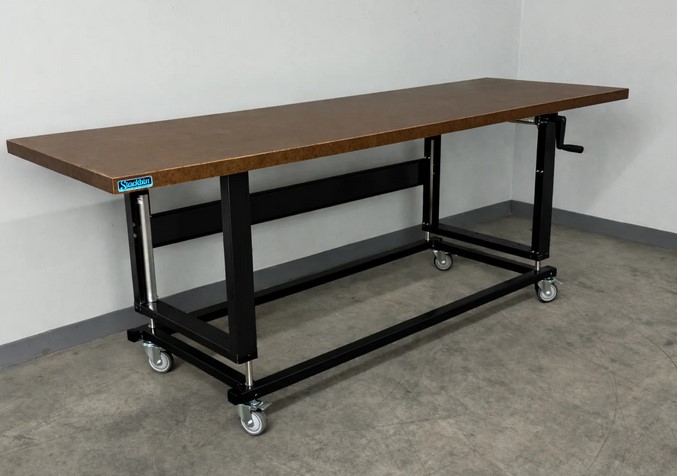
I remember a specific July afternoon on a deck build. I was hunched over a pair of shaky plastic sawhorses, trying to make a precision miter cut. The “table” wobbled, the wood slipped, and I ended up wasting a $50 piece of cedar and nearly losing a finger. That was the day I realized that a work bench portable isn’t just a luxury; it is the backbone of your operational infrastructure.

Think of a portable workbench as the “Command Center” of your project. Without it, you’re just a person with a pile of tools on the floor. With it, you have a steady, reliable partner that transforms any chaotic backyard or dusty garage into a professional-grade workshop.

Why Every DIYer Needs a Portable Nerve Center

In the world of home improvement, we often obsess over the “active” tools—the drills, the saws, the impact drivers. But we rarely give credit to the “passive” infrastructure.

A high-quality work bench portable serves as your literal foundation. If your foundation is weak, your measurements will be off, your cuts will be jagged, and your back will be aching by 2:00 PM.

The Anatomy of Stability

What makes a workbench “portable” yet “industrial”? It’s all about the strength-to-weight ratio. Modern units use high-grade steel or reinforced polymers that can support upwards of 1,000 lbs while weighing less than 30 lbs themselves.

Speed of Deployment

In my experience, the biggest barrier to finishing a project is the “setup friction.” If it takes you thirty minutes to lug out a heavy table and set up your gear, you won’t want to do the work. A professional-grade portable bench should deploy in under 15 seconds. It’s the difference between “I’ll do that next weekend” and “I’ll knock that out right now.”

Technical Deep-Dive: Key Features to Look For

When you’re shopping for a work bench portable, don’t just look at the price tag. Look at the mechanical “DNA” of the unit. Here is what I look for after ten years in the dirt:

1. Integrated Clamping Systems

A bench is useless if it can’t hold your workpiece. Look for benches with dog holes (those round holes on the surface) and integrated T-tracks.

Pro Insight: Using “Bench Dogs” (small pegs) allows you to secure odd-shaped objects like circular table tops or chair legs that a standard C-clamp can’t touch.

2. The “Twist” Test

When the bench is unfolded, grab the corners and try to twist it. If it flexes more than a quarter-inch, walk away. Side-to-side stability (lateral shear) is vital when you are hand-planing wood or using a reciprocating saw.

3. Surface Material

Most experts prefer a mix of high-impact resin and metal. Resin is great because it won’t damage your saw blades if you accidentally nick the table, but metal frames provide the “bones” needed for longevity.

Scaling Your Workflow: From Beginner to Pro

For beginners, the work bench portable is a safety device. It keeps your hands away from the blade and your workpiece at waist height. For the intermediate DIYer, it becomes a precision tool.

Using the Bench as a Tool Stand

Many modern portable benches are designed to host a miter saw or a portable table saw. By aligning two benches of the same height, you create an “outfeed” table.

Analogy: Imagine trying to cook a five-course meal on a single cutting board. It’s impossible. Adding a second workbench is like adding a second kitchen counter; suddenly, you have room to breathe, organize, and execute.

The Utility of On-Site Mobility

Unlike a heavy oak workbench bolted to a garage floor, the portable version follows the sun. If you’re sanding a cabinet door, you want to be outside where the dust blows away, not in your enclosed garage. This “operational flexibility” is why even pro contractors with $100,000 shops still keep three or four portable units in their trucks.

Step-by-Step: Setting Up Your Mobile Station

  1. Clear the Landing Zone: Ensure the ground is level. Most portable benches have fixed legs, so a rocky backyard will lead to wobbling.

  2. Lock the Joints: Always double-check the locking pins. I’ve seen benches collapse because a user forgot to engage the secondary safety latch.

  3. Organize the Under-Zone: Use the space beneath the bench for your vacuum or heavy tool bags. This adds “ballast,” making the bench even more stable.

  4. Lighting is Key: Position your bench so the light comes from the side, not behind you. You don’t want to be working in your own shadow.

Expert Advice: Maintenance and Longevity

💡 Pro Tip: The Wax Trick

If you have a workbench with a wooden or composite top, rub a bit of paste wax or even an old candle on the surface. This prevents glue drips (from woodworking projects) from sticking to the bench. When the glue dries, it will pop right off with a putty knife!

⚠️ Hidden Warning: The Load Limit Myth

Just because a box says “Supports 1,000 lbs” doesn’t mean you should drop a 1,000-lb engine block on it. That rating is for static weight (weight sitting still). Dynamic weight—like the force of you pushing a saw or hammering a joint—multiplies the stress on the joints. Always aim to stay under 50% of the rated capacity for active work.

Comparison of Bench Types

Feature Lightweight Plastic Heavy-Duty Steel Fold Professional Work Station
Best For Light Crafting / Painting General Construction Precision Woodworking
Portability Excellent Moderate Fair
Clamping Limited Integrated Slideways T-Tracks & Dog Holes
Durability 1-3 Years 5-10 Years Lifetime

In the end, choosing a high-quality work bench portable is an act of kindness to your future self. It saves your back, it saves your time, and most importantly, it saves the quality of your work. You can have the most expensive drill in the world, but if you’re drilling into a wobbly surface, your hole will be crooked.

Start looking at your workspace as an infrastructure, not just a place to put things. Once you experience the “utility” of a truly stable, mobile command center, you’ll wonder how you ever finished a project without one.

What is the biggest “pain point” in your current workspace? Are you tired of working on the floor, or is your current table just too shaky for the job? Let me know in the comments below, and let’s figure out the best setup for your next project!